
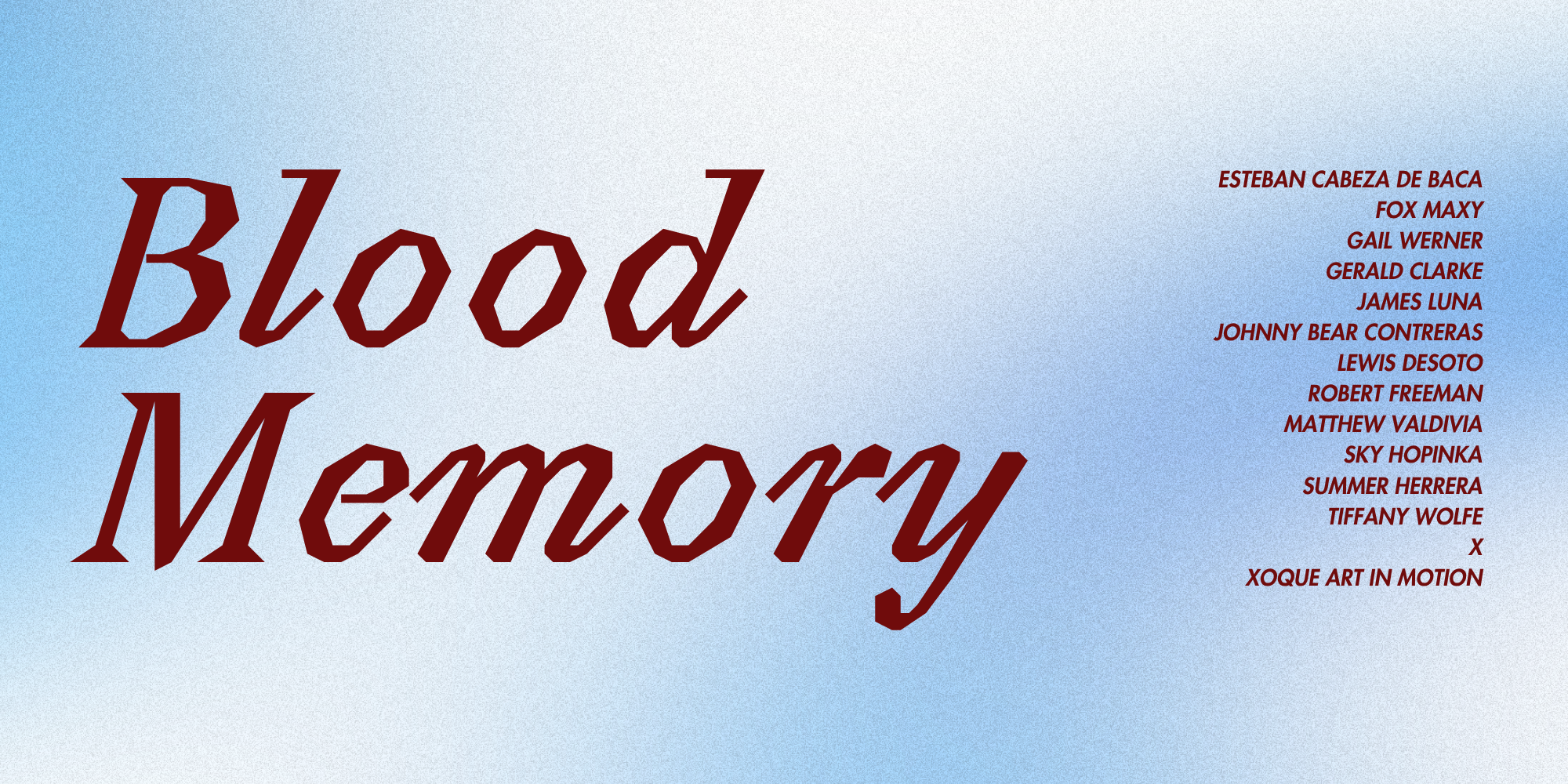
Blood Memory is a major exhibition that examines how ancestral knowledge and cultural memory continue to shape the present through contemporary art practices. The exhibition centers the work of regional artists from Native nations and Indigenous communities who consider how ancestral knowledge and lived experience are passed on across generations. Through installation, painting, sculpture, film, photography, fashion, and design, the exhibition presents inheritance as an active and sometimes unsettled process. Histories may be preserved, questioned, reclaimed, or understood anew.
The exhibition takes its title from a term developed across the writing of Kiowa author N. Scott Momaday. In his work, memory can extend beyond the limits of an individual life. It may emerge in an intuitive recognition of place, in an ancestral story felt with the force of personal memory, or through relationships sustained by language, oral tradition, imagination, and land. The artists in Blood Memory direct attention toward these forms of inheritance, and investigate how the past remains present in the body, in materials and images, and in the choices artists make now.
Featured Artists
Esteban Cabeza de Baca, Fox Maxy, Gail Werner, Gerald Clarke, Johnny Bear Contreras, Lewis deSoto, Robert Freeman, Matthew Valdivia, Sky Hopinka, Summer Herrera, Tiffany Wolfe, X, and XoQUE Art in Motion.
The exhibition includes a presentation organized by Cheryl Madrigal, Cultural Resources Manager of the Rincon Band of Luiseño Indians, drawing upon the work of the Wa$xayam Pomki Museum.
The exhibition also includes Before There Were Borders, an interactive extended reality mural by OurWorlds, presented as a digitally connected counterpart to the eponymous mural at the San Diego Central Library in downtown San Diego. Museum visitor contributions will become visible to Central Library patrons, and vice versa, creating an evolving exchange between the two sites. The project was created by OurWorlds in collaboration with members of the Cahuilla, Kumeyaay, Payómkawichum, and Kuupangaxwichem communities.
Support
Major support is provided by the Henry Luce Foundation, the Rincon Band of Luiseño Indians, and the California Center for the Arts Charitable Trust, with additional production support from George’s Camera.
